The Single Best Thing to Do for Balance Issues
Most people take walking for granted since it’s something many of us learn as babies. However, balance issues affect your ability to walk comfortably. Such unsteadiness also increases your fall risk, which may increase your fear of walking, further reducing strength and stability.
Balance issues affect people of all ages but are more common in older adults. They often result from medical problems and other complications, increasing the risk of injury. Although several possible treatment options and lifestyle changes may help, exercise is still the best thing to address this issue. It has several benefits to reduce your balance concerns and keep you on your feet.
Depending on the cause of your condition, physical therapy may also be required. Consulting with a trained therapist allows them to customize a treatment plan to meet your needs and goals. They’ll incorporate safe, effective exercises and offer nutrition advice and other recovery methods. For more information on ways to improve your balance problems, keep reading.
Exercise Is Most Powerful for Balance Issues When Done Consistently
According to experts, over 25% of seniors fall each year, often resulting in severe injury and hospitalization 1. Balance problems from medications, stroke, vision issues, nerve damage, muscle weakness, or other conditions frequently cause such falls 2. Treatment for these conditions varies, often including rehabilitation, medication, and lifestyle changes 3. However, physical therapy and other exercises offer the best results in most cases, including the options discussed below.
Daily single-leg stands
Although balance issues have several causes, some exercises increase stability and reduce the risk of injury. Single-leg stands are frequently recommended since they have several benefits.
Studies show that single-leg stands force the leg muscles to exert greater amounts of force than usual 4. Doing so strengthens these muscles. These exercises also improve posture by increasing stability and balance and preventing falls.
Evidence also shows that single-leg stands improve cognitive function, including memory, attention, and spatial orientation 5. Your brain works hard using sensory input to work the muscles that keep you upright. Such focus reduces cognitive decline, which may improve the neurological problems causing your balance issues.
There are several variations on single-leg stands, depending on your stability level 6. Beginners may bend a knee and lift their foot off the ground using a stable surface for support if needed. You can also raise your foot and extend your leg or stand on a pillow for a more challenging exercise.
Walking techniques
There are specific walking techniques for improving balance and each of them is powerful. These are some of them:
- Walking on uneven surfaces
- Heel-to-toe walking
- Walking backwards
Practice these walking techniques regularly to see results.
Although walking could be tricky when balance is compromised, it’s also a fantastic exercise for improving balance issues. Experts state that walking increases muscle strength, joint movement, and coordination 7. As your balance improves, your fall risk decreases, as does your risk of injury.
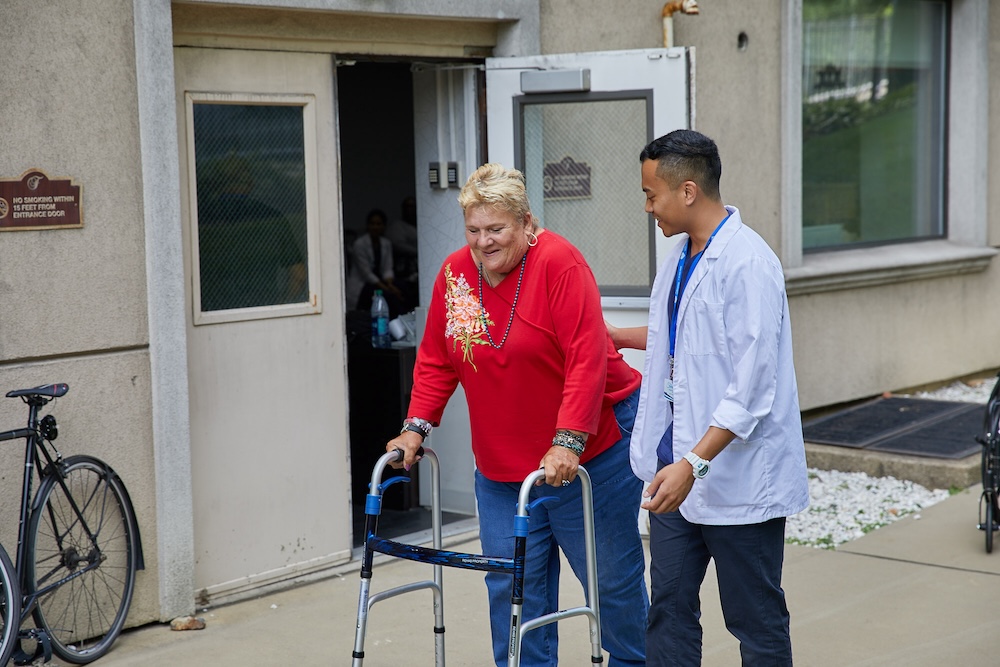
Of course, people with these problems may need to take things slow at first. Using a walker or cane may be advised until you’ve regained some muscle strength. You may try heel-toe walking using a wall for support if needed. Step-ups may also improve strength and balance.
Other tips include standing up straight with your eyes forward 8. Relaxing your shoulders and keeping them back reduces tension and improves posture. Light, short steps are also recommended to reduce joint impact and injury.
Resources:
- CDC, Jan. 27, 2026, Facts About Falls
https://www.cdc.gov/falls/data-research/facts-stats/index.html - NIA, Older Adults and Balance Problems
https://www.nia.nih.gov/health/falls-and-falls-prevention/older-adults-and-balance-problems - Mayo Clinic, Balance Problems
https://www.mayoclinic.org/diseases-conditions/balance-problems/diagnosis-treatment/drc-20350477 - PMC, Dec. 21, 2024, Single-Leg Balance and Lower Limb Strength: Quantitative Analysis with the Balance Master System
https://pmc.ncbi.nlm.nih.gov/articles/PMC11678305/ - Eternal Health, April 1, 2025, Standing on one leg to prevent dementia
https://eternalhealth.org/standing-on-one-leg-to-prevent-dementia/ - Mayo Clinic, Aug. 20. 2024, Balance exercises
https://www.mayoclinic.org/healthy-lifestyle/fitness/in-depth/balance-exercises/art-20546836 - UCLA Health, Why balance is so important (and how to improve it)
https://www.uclahealth.org/news/article/why-balance-so-important-and-how-improve-it - Harvard Health Publishing, May 25, 2020, Perfecting your walking technique
https://www.health.harvard.edu/healthy-aging-and-longevity/perfecting-your-walking-technique
This article contains informational and educational materials and does not replace health or medical advice. For questions or concerns regarding your medical condition or health objectives, speak to a qualified physician or healthcare provider.


Leave A Comment