How to Tell if Chest Pain is Heart or Musculoskeletal?
Experiencing chest pain is scary since many people assume it’s related to their heart. However, this may not always be the case. In fact, musculoskeletal pain could also cause discomfort in the chest without affecting your heart. Knowing the difference between the symptoms could help you figure out which issue you’re dealing with.
Of course, you should speak to your doctor for a proper diagnosis. When heart conditions are serious, patients may require specialized treatment, such as cardiac rehabilitation. That rehab may include exercise, dietary education, and counseling to strengthen your heart and prevent worsening symptoms. Let’s take a look at what your chest pain symptoms are telling you.
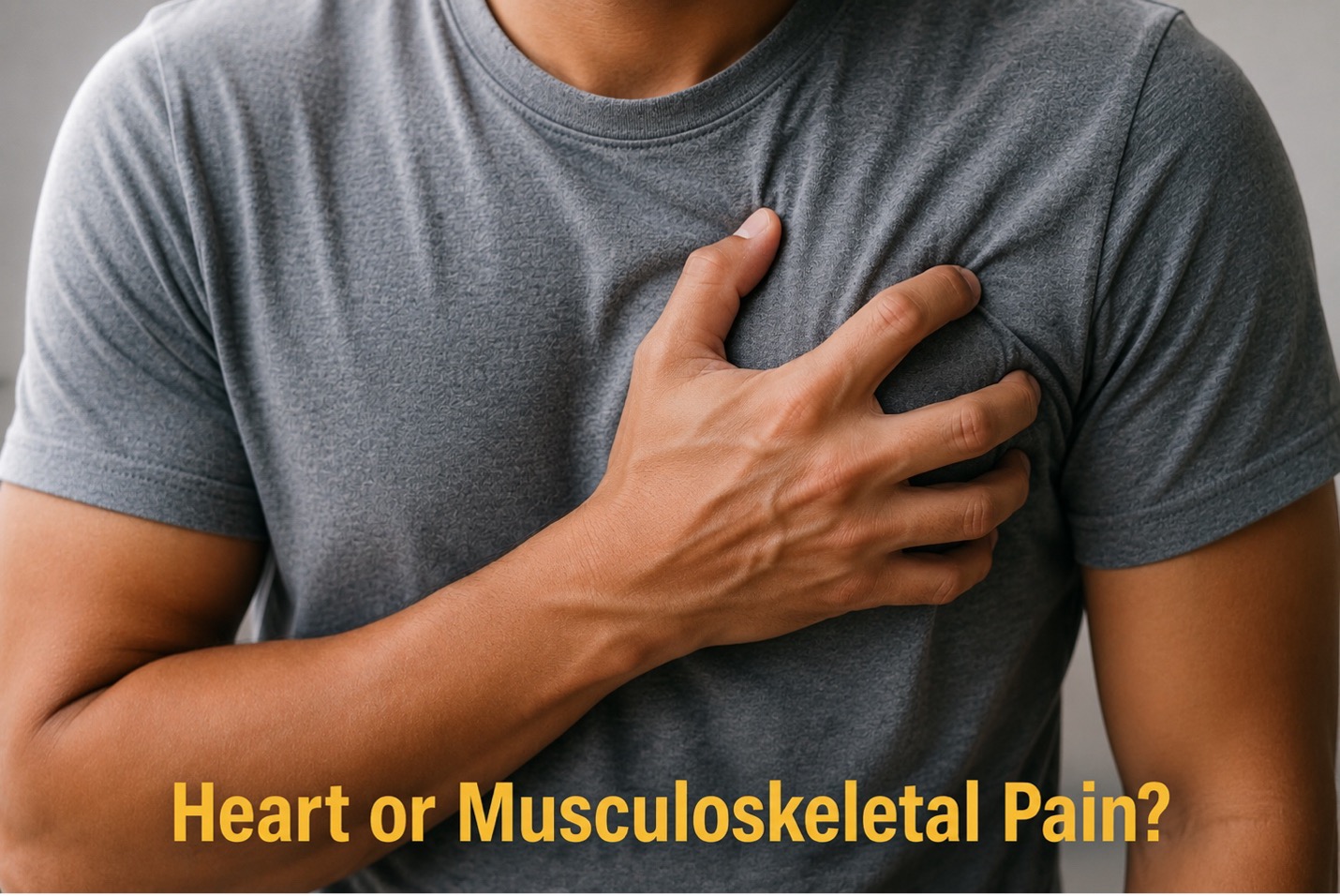
Differences Between Heart and Musculoskeletal Pain
The heart is a vital organ that delivers blood, oxygen, and nutrients to the rest of the body. The musculoskeletal system consists of muscles, tendons, and bone, all of which provide chest stability and support 1. When experiencing pain, it isn’t always easy to determine where it’s coming from unless you know what to look for. The following sections discuss the differences in pain from these two areas.
Symptoms of musculoskeletal conditions
According to studies, over 30% of our population experiences musculoskeletal pain that is unrelated to the heart 2. The type of pain varies, depending on the individual’s age, sex, mood, or social factors. The area that’s injured and the cause also may affect the type of pain you’re feeling. Here are some of them:
- A dull, steady ache or occasional sharp pain that may come and go
- Pain that intensifies when breathing, moving, lifting, using your arm/s
- Pain around the ribs
The ribs are often bruised from accidents, falls, or intense coughing. The pain is usually dull, but intensifies when you breathe due to rib movement 3. Inflammation of the tissue or joints near the ribs may also cause dull or sharp pain.
Strained, torn, or injured muscles result from accidents, heavy exercise, or respiratory illnesses. Experts state that the pain is often a steady ache or a random sharp sensation 4. Ligament pain is similar and often worsens with movement.
Symptoms of heart conditions
- Pressure, squeezing, tightness, or fullness in the chest
- Sharp pain or a dull pressure in the chest
- Pain that spreads to the neck, jaw, back, shoulders, arms, or stomach
- Pain that may begin in the center or left side of the chest
Like musculoskeletal problems, heart pain varies depending on the cause. It may also spread to other areas and is often severe, requiring medical assistance.
When caused by a heart attack, the pain feels like pressure, fullness, or squeezing. It usually begins in the center or left side of the chest. However, experts state that you may feel it in the jaw, neck, back, arms, or shoulders 5.
Medical professionals also link chest pain to angina 6. The symptoms they describe include pressure, squeezing, or tightness in the chest. Pain in the neck, jaw, back, shoulders, arms, and stomach may also occur.
Myocarditis or pericarditis causes inflammation in the heart. Though they may affect different areas, the symptoms for both include sharp pain, tightness, or dull pressure.
When To Go To The Emergency Room?
Seek emergency care for new, sudden, severe, or unexplained chest pain, especially if you are unsure of its cause!
Musculoskeletal pain often isn’t as severe as issues involving the heart. According to experts, you should seek medical attention if it lasts for several weeks 7. If it affects your routine or sleep, or includes numbness, swelling, fever, or other symptoms, speak to a doctor. If an injury or accident causes your pain, it’s also best to seek medical attention in case of internal damage.
Heart pain is often more severe than musculoskeletal problems, especially if caused by a heart attack. Though the pain may be dull or pressure-like, experts state that the slow progression could cause permanent damage. It’s best to seek medical attention immediately, even if you’re not sure of the cause.
Resources:
- KenHub, Nov. 3, 2023, Musculoskeletal system
https://www.kenhub.com/en/library/anatomy/the-musculoskeletal-system - PMC, Feb. 26, 2021, Pathophysiology of musculoskeletal pain: a narrative review
https://pmc.ncbi.nlm.nih.gov/articles/PMC7934019/ - Keck Medicine of USC, June 28, 2025, 3 Reasons You Might Have Rib Cage Pain
https://www.keckmedicine.org/blog/3-reasons-you-might-have-rib-cage-pain/ - Cleveland Clinic, Aug. 15, 2024, Musculoskeletal Pain
https://my.clevelandclinic.org/health/symptoms/musculoskeletal-pain - CDC, Oct. 24, 2024, About Heart Attack Symptoms, Risk, and Recovery
https://www.cdc.gov/heart-disease/about/heart-attack.html - British Heart Foundation, Chest pain: What are the Common Causes?
https://www.bhf.org.uk/informationsupport/heart-matters-magazine/medical/chest-pain - Stanford Medicine, Understanding Musculoskeletal Pain: Causes, Symptoms, and What Can Help
https://painnews.stanford.edu/news/understanding-musculoskeletal-pain-causes-symptoms-and-what-can-help - Emergency Physicians, Heart Attack
https://www.emergencyphysicians.org/article/know-when-to-go/heart-attack
This article contains informational and educational materials and does not replace health or medical advice. For questions or concerns regarding your medical condition or health objectives, speak to a qualified physician or healthcare provider.





Leave A Comment